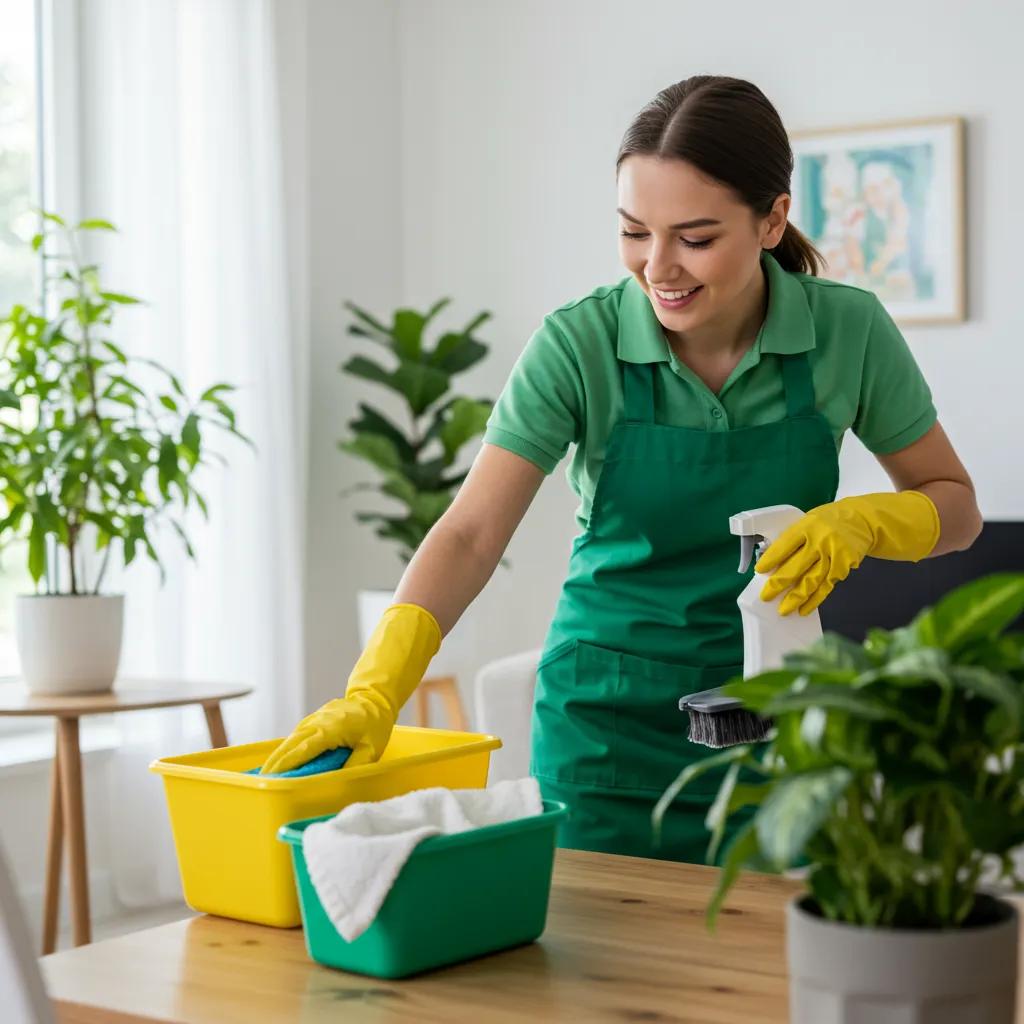
Green Cleaning Services Explained: What Sets Them Apart?
How Green Cleaning Services Differ From Traditional Janitorial Options: An Informative Comparison of Eco-Friendly and Sustainable Cleaning Solutions

Green cleaning uses non-toxic, low-VOC products and sustainable methods to reduce chemical exposure and environmental harm, while traditional janitorial approaches often rely on harsher, synthetic chemicals and single-use disposables. This article explains the chemical and product differences, health and indoor air quality impacts, environmental outcomes, and practical cost–benefit trade-offs so readers can make informed facility or home choices. Readers will learn how biodegradable ingredients and credible certifications validate product claims, when green methods meet disinfection needs, and which operational practices reduce VOCs and waste. The piece maps technical concepts to real-world use cases for homeowners, property managers, and construction sites and offers actionable steps to evaluate product labels and measure ROI. Southern Green Residential and Commercial Cleaning Services is used here as a Florida-based example provider of professional, eco-conscious cleaning—see the dedicated section below for their tailored local offerings.
What Are the Key Product and Chemical Differences Between Green Cleaning and Traditional Janitorial Services?
Green cleaning centers on products formulated to be low-VOC, biodegradable, and non-toxic, while traditional janitorial services frequently use alkaline, chlorinated, or quaternary ammonium-containing cleaners that prioritize immediate potency. The mechanism that makes green cleaning safer is ingredient selection: surfactants and solvents with known biodegradation pathways replace persistent synthetic molecules, reducing residual off-gassing and downstream pollution. Understanding these product-level distinctions helps purchasers weigh short-term efficacy against long-term health and environmental costs. This overview leads naturally into direct chemical comparisons, biodegradable ingredient roles, and the certifications that help verify manufacturer claims.
How Do Non-Toxic and Harsh Chemicals Compare in Cleaning Services?
Non-toxic cleaners typically rely on plant-derived surfactants, mild solvents, and buffered pH formulations that clean soils without creating persistent residues; they reduce irritant exposures and lower VOC emissions. In contrast, harsh chemical families—such as chlorinated bleaches, strong alkalis, and some quaternary ammonium compounds—offer powerful soil or microbial removal but often increase indoor VOCs, odor, and potential skin or respiratory irritation. Practical choice depends on task: green alternatives handle routine cleaning and stain removal effectively when paired with agitation and dwell time, while certain high-risk disinfection scenarios may still require more aggressive, registered products. Comparing application context and exposure pathways clarifies when to favor a green product and when stricter disinfectants are warranted.
Cleaning Products' Chemistry, Indoor Air Quality, and Health Impacts
The use of cleaning and disinfecting products both at work and at home increased during the COVID-19 pandemic. Those products often include surfactants, acids/bases, carcinogens such as chloroform, and endocrine-disrupting chemicals, such as cyclosiloxanes, phthalates, and synthetic fragrances, which may cause harmful health effects among professional cleaners as well as among people exposed at home or in their workplaces. The aim of this study was to synthesize the effects of the commonly used chemical, surface cleaning and disinfecting products on indoor air quality, focusing on chemical and particulate matter pollutants, exposure, and human health in residential and public buildings.
What Role Do Biodegradable Ingredients Play in Eco-Friendly Cleaning?

Biodegradable ingredients break down into simpler, non-persistent molecules through natural microbial processes, reducing long-term accumulation in waterways and soils; this lifecycle difference decreases chronic ecotoxicity risks. Examples include certain alkyl polyglucosides and plant-based solvents that perform comparably to petrochemical surfactants but leave fewer persistent residues after wastewater treatment. Trade-offs exist: some biodegradable formulas require longer contact time or different dilution strategies to match the cleaning power of conventional products, and procurement should consider concentration and packaging to maximize environmental benefits. Evaluating biodegradability alongside performance and usage patterns helps facilities minimize runoff impacts without sacrificing cleanliness.
Which Certifications Validate Green Cleaning Products?
Trusted certifications provide third-party verification of formulation criteria—examples commonly referenced include Green Seal and EPA Safer Choice, which assess ingredient toxicity, biodegradability, and labeling transparency rather than marketing claims alone. Certification mechanisms typically require ingredient disclosure, limits on hazardous constituents, and performance testing, so certified products reduce buyer uncertainty about safety and environmental impact. Consumers and facility managers should verify certification identifiers on product labels and consult certifier registries to confirm claims when possible, focusing on the standard scope (e.g., cleaning versus disinfecting). Knowing what each certification tests enables more precise purchasing decisions and supports procurement policies aligned with sustainability goals.
Different product chemistries imply different exposure pathways and environmental fates, and that understanding leads directly into how green cleaning affects health and indoor air quality as well as practical deployment choices.
How Does Green Cleaning Impact Health and Safety Compared to Traditional Methods?
Green cleaning reduces airborne and surface residues that can trigger irritation, asthma, and allergic responses by prioritizing low-VOC formulas and methods that minimize aerosolization. The mechanism is twofold: lower-emitting chemistries reduce VOC concentration in indoor air, and operational practices—wet wiping, microfiber use, and HEPA vacuuming—limit particulate and allergen redistribution. For vulnerable populations such as children, pets, and individuals with asthma, these changes translate into measurable exposure reductions and fewer acute symptoms when implemented consistently. This health-first perspective naturally leads to specific indoor air quality improvements and practical scheduling or notification practices that increase safety for occupants.
How Does Green Cleaning Improve Indoor Air Quality and Reduce VOCs?

Green products reduce VOC sources by substituting low-evaporation solvents and fragrance-free formulations, which limits off-gassing after application and shortens the period of elevated indoor pollutant levels. VOCs originate from solvents, fragrances, and certain disinfectants; lowering these inputs reduces peak exposures that can impair cognitive function and exacerbate respiratory conditions. Combining low-VOC products with ventilation and staggered cleaning times further lowers concentrations, while monitoring or occupant feedback helps calibrate protocols. Practical steps for facilities include choosing certified low-VOC supplies, increasing post-cleaning ventilation, and avoiding aerosolized sprays indoors.
Green vs. Regular Cleaners: VOC Emissions and Indoor Air Quality
In recent years, “green” cleaners have become increasingly popular, with an implicit assumption that these are better for our health and/or the environment. However, there is no strong evidence to suggest that they are better for indoor air quality compared to regular products. In this study, the VOC composition of 10 regular and 13 green cleaners was examined by headspace analysis. Monoterpenes were the most prevalent VOCs, with average total monoterpene concentrations of 8.6 and 25.0 mg L−1for regular and green cleaners, respectively.
Why Are Green Cleaning Services Safer for Children, Pets, and Allergy Sufferers?
Green cleaning reduces direct contact risks by using non-toxic, fragrance-free formulations and by emphasizing wet-cleaning and microfiber capture over aerosolization and powder residues that can cling to hands, floors, and toys. Exposure pathways for children and pets include dermal contact, hand-to-mouth behavior, and inhalation of resuspended dust; lowering persistent chemical residues reduces chronic exposure risk for these groups. Operational practices—posting schedules, using fragrance-free options, and allowing drying/ventilation time—further protect sensitive occupants while maintaining cleanliness. Adopting these measures translates into fewer acute irritations and aligns with facility health and safety priorities.
This health-focused view connects directly to environmental benefits from reduced pollutant load and waste, which we explore next.
What Are the Environmental Benefits of Choosing Green Cleaning Over Traditional Janitorial Options?
Choosing green cleaning reduces environmental loading of persistent chemicals, curbs plastic and packaging waste through concentrate and refill systems, and lowers energy demands when efficient equipment is used. The key mechanism is reducing pollutant inputs at source—biodegradable ingredients and minimized packaging mean less contamination reaching municipal treatment systems and natural waterways. Operational shifts such as microfiber use, refillable dispensers, and equipment upgrades decrease single-use waste and total lifecycle impact. These environmental gains support corporate sustainability metrics and local ecosystem protection while often aligning with regulations or tenant expectations.
How Does Green Cleaning Reduce Water and Soil Pollution?
Green products designed to biodegrade limit persistent organic compounds that bypass wastewater treatment and accumulate in sediments, thereby lowering ecotoxic risk to aquatic organisms and reducing soil contamination from runoff. High-risk use-cases, such as exterior pressure washing or construction site cleanup, particularly benefit from biodegradable formulations and containment practices to prevent untreated runoff. Choosing concentrated chemistries and controlled application methods also reduces total pollutant mass entering drains, further protecting local watersheds. These practices demonstrate tangible reductions in pollutant load when compared with repeated use of persistent synthetic cleaners.
Before the table below, consider how operational practices map to measurable environmental outcomes; the following EAV-style comparison connects practices to resource impacts and quantified examples.
| Practice | Resource Impact | Value / Example |
|---|---|---|
| Biodegradable formulations | Lower aquatic persistence | Reduces long-term contamination risk in runoff and effluent |
| Concentrated refills | Less packaging waste | Cuts single-use plastic by up to 70% per month in typical programs |
| Microfiber cleaning | Reduced chemical and water use | Improves soil removal with less detergent and fewer rinses |
This mapping shows how supplier and procurement choices translate directly into reduced pollution and waste, and it sets up specific operational steps for facilities to implement.
What Sustainable Practices and Waste Reduction Methods Are Used?
Sustainable cleaning emphasizes refill systems, concentrated dosing, reusable microfiber, and optimized inventory controls that reduce over-ordering and expired chemicals. These tactics lower packaging waste and the carbon footprint of logistics, while microfiber cloths reduce chemical use by relying on mechanical soil removal. Quantifying waste reduction helps procurement teams set targets—switching to concentrates and refillable dispensers is a straightforward first step. Implementing training and inventory oversight locks in these benefits and reduces the environmental footprint of routine maintenance.
How Does Energy Consumption Differ Between Green and Traditional Cleaning?
Energy differences depend on equipment choices: HEPA vacuums and efficient floor machines often draw less power per cleaned area and can reduce repeat cleaning cycles, while some green methods rely on longer dwell times that slightly increase on-site operating minutes. Lifecycle energy benefits also accrue from lower packaging production and reduced transport when concentrates are used. Trade-offs require balancing equipment efficiency, labor scheduling, and product dwell times to optimize total energy per service delivered. Considering energy alongside chemical and waste metrics yields a comprehensive sustainability assessment.
The environmental improvements described above create business value, which we now compare directly with traditional approaches in terms of effectiveness, cost, and ROI.
How Do Cleaning Effectiveness, Costs, and Business Value Compare Between Green and Traditional Services?
Green cleaning can match or approach traditional methods in many routine cleaning and maintenance tasks when proper products, application protocols, and dwell times are used, while offering added business value through improved employee wellness and brand positioning. Effectiveness depends on selecting appropriate formulations and following manufacturer contact times for disinfecting tasks where required; some high-level disinfection scenarios still necessitate EPA-registered agents. The cost picture includes modestly higher upfront product prices or training investments offset by long-term savings: reduced absenteeism, longer surface lifespans, and lower waste disposal fees frequently drive positive ROI. This cost–benefit framing helps facility managers evaluate total cost of ownership and operational outcomes.
Are Green Cleaning Services as Effective at Disinfection as Traditional Methods?
Green cleaning meets many cleaning and sanitizing needs, and in settings where EPA-registered disinfectants are required—such as certain clinical or outbreak-response contexts—those products remain the standard for validated kill claims. For routine commercial or residential use, green disinfectants that carry appropriate efficacy claims and follow correct contact times can provide reliable microbial control while reducing toxic exposures. The decision rule is task-dependent: use EPA-registered disinfectants when regulatory compliance or documented hospital-grade kill claims are necessary; otherwise, select certified green products and apply them per label instructions. Adherence to protocols and monitoring ensures outcomes comparable to traditional approaches.
Before the next table, the following EAV-style table clarifies cost categories and ROI drivers for businesses considering a transition.
| Cost Type | Short-term vs Long-term | Value / ROI Driver |
|---|---|---|
| Upfront product/equipment | Short-term increase | Investment in low-VOC products and microfiber yields long-term savings |
| Training and protocols | Short-term investment | Reduces rework and improves efficacy, enhancing productivity |
| Health-related costs | Long-term reduction | Lower absenteeism and medical complaints improve productivity metrics |
This cost mapping clarifies where investments occur and how savings or value accrue over time, making the business case for green cleaning more concrete.
What Is the Cost-Benefit Analysis of Green Cleaning Versus Traditional Janitorial?
Initial costs for certified green products, concentrates, and staff training may be higher than purchasing bulk conventional cleaners, but operational savings and intangible benefits often offset the delta within months to a few years depending on scale. Key ROI drivers include fewer sick days, lower HVAC and surface maintenance costs, reduced waste disposal fees, and stronger tenant or customer satisfaction that supports retention. A simple cost-benefit evaluation should include direct supply costs, labor time for proper application, and downstream savings from reduced absenteeism and maintenance. Framing decisions in total cost of ownership terms, rather than per-unit price alone, reveals the value proposition.
How Can Green Cleaning Enhance Corporate Image and Employee Wellness?
Adopting green cleaning supports sustainability reporting and corporate social responsibility narratives while delivering tangible employee wellness benefits that improve recruitment, retention, and productivity metrics. Communicating these practices to stakeholders—via sustainability disclosures or internal messaging—translates operational choices into measurable reputation gains and workforce advantages. Operationally, demonstrating lower exposure risks and better indoor air quality becomes a recruitment and tenant-retention asset tied to ESG objectives. These brand and HR benefits further strengthen the financial rationale for selecting greener cleaning programs.
After outlining business value, the article now presents a company-specific example of how tailored green cleaning services can be delivered locally.
How Does Southern Green Residential and Commercial Cleaning Services Deliver Tailored Eco-Friendly Cleaning Solutions?
Southern Green Residential and Commercial Cleaning Services positions itself as a Florida-based provider of tailored eco-friendly residential and commercial cleaning solutions, serving markets including Orlando, Jacksonville, and Miami. Their approach emphasizes customizable plans that align product selection, frequency, and scope with client health and sustainability goals while using low-VOC and biodegradable products where appropriate. Quality assurance and client communication are central to maintaining consistent outcomes, and the company frames offerings around measurable benefits such as reduced downtime and occupant comfort. For organizations seeking localized, sustainable cleaning partners, Southern Green presents a practical example of how green programs can be operationalized in regional contexts.
At Southern Green Residential & Commercial Cleaning, we take pride in operating with the highest standards of trust and professionalism. Our company is a proud member of the International Janitorial Cleaning Services Association (IJCSA), representing excellence in the $340 billion cleaning services industry worldwide. We are fully licensed, bonded, and insured, providing our clients with peace of mind on every job. We understand that inviting a cleaning team into your space is a matter of trust—that’s why all of our staff undergo thorough background checks and receive professional training to ensure consistent, top-tier service. Our commitment to excellence is reflected in our track record of 5-star ratings from satisfied clients across Florida, showcasing our dedication to quality, reliability, and outstanding customer experiences.
Southern Green's story is one of resilience and growth, setting a foundation of expertise in the cleaning industry. With over a decade of experience, our founder emerged from a challenging phase during the Covid-19 crisis, compelled by a vision to create an innovative cleaning company. From humble beginnings, rooted in a personal journey from managing an outsourced business, this venture evolved into a formidable force in Florida's cleaning scene. Our commitment to professional excellence is unmatched, supported by a rapidly growing brand that shows no signs of slowing. Expanding our service to cover Orlando, Davenport, and beyond, we've built a reputation for diligence and dedication to customer satisfaction. Our mission reaches beyond cleanliness; it encompasses creating healthy, welcoming environments for our clientele.
It is this very dedication that fuels our ambition to consistently elevate our services. Southern Green stands as a beacon of reliability and eco-conscious practices, striving to leave every corner of Florida cleaner and greener, every day.
What Customized Green Cleaning Plans Does Southern Green Offer for Florida Clients?
Southern Green offers a range of customizable plans designed to meet residential and commercial needs, from recurring maintenance to deep cleans and post-construction services, with options to prioritize fragrance-free products, high-touch disinfection, or concentrated refill systems. Frequency and scope are tailored—daily, weekly, or one-time deep services—allowing clients to align budgets with performance goals and health priorities. Custom add-ons can include specialized floor care and scheduled HEPA vacuuming for allergy-sensitive environments. These flexible structures help clients in Florida balance cost, cleanliness, and occupant safety.
How Does Southern Green Ensure Certified Reliability and Client Satisfaction?
To ensure reliability, Southern Green implements standardized checklists, staff training on green product application and dwell times, and client feedback loops that verify outcomes and adjust protocols as needed. Staff training focuses on correct dilution, contact times for disinfecting when required, and microfiber techniques that reduce chemical use while improving soil removal. Follow-up and satisfaction checks close the quality loop and support continuous improvement, while transparent communication about product choices builds trust with clients. These practices aim to deliver consistent performance alongside sustainable benefits.
Which Residential and Commercial Green Cleaning Services Are Available in Orlando, Jacksonville, and Miami?
Southern Green provides core services across these Florida markets, including routine residential maintenance, commercial facility cleaning, post-construction cleans, floor care, and tailored programs for sensitive environments that prioritize low-VOC products. Geographic responsiveness includes scheduling flexibility to meet local business hours and event-driven cleaning needs, with options to scale services for multi-site commercial clients. Booking and service inquiries are handled through the company’s local contact channels, and clients are encouraged to request customized proposals that reflect site-specific needs. This local availability supports institutions and homeowners seeking regionally delivered green cleaning.
Having described Southern Green’s offerings, the article next addresses common reader questions in a concise FAQ format with clear answers and a brief booking prompt.
What Are Common Questions About Green Cleaning Versus Traditional Janitorial Services?
This FAQ answers common, search-friendly questions about green cleaning effectiveness, cost, disinfection capability, and suitability for people with sensitivities, providing concise guidance for decision-making. Each answer is optimized for clarity and immediate utility, offering quick decision rules and highlighting when to consult a service provider for tailored plans. Southern Green can provide local consultations or quotes to help apply these answers to specific Florida residences or facilities.
What Is the Difference Between Green Cleaning and Traditional Janitorial Services?
Green cleaning prioritizes non-toxic, low-VOC, and biodegradable products and sustainable methods, while traditional janitorial services often rely on stronger synthetic chemicals and disposable supplies for rapid soil or microbial removal. The practical outcome is that green cleaning reduces indoor air pollutants and downstream environmental impacts, whereas traditional methods may prioritize short-term speed and potency. Choose green cleaning for routine maintenance and sensitive populations, and reserve stronger agents for regulated disinfection scenarios.
Are Green Cleaning Services More Expensive Than Traditional Cleaning?
Green cleaning can have higher upfront supply or training costs, but long-term total cost of ownership often favors green programs due to lower waste disposal fees, reduced surface degradation, and productivity gains from healthier indoor environments. When evaluating costs, include indirect benefits like fewer sick days and extended asset life. Many organizations find the investment pays off through combined operational and human-capital savings.
Do Green Cleaning Products Effectively Clean and Disinfect?
Green products effectively remove soils and many microbes when correctly applied, and some bear efficacy claims suitable for commercial use; however, EPA-registered disinfectants remain necessary where specific kill claims or regulatory compliance are required. Decision rules: use certified green sanitizers for routine maintenance and EPA-registered disinfectants in high-risk or regulated environments. Proper contact time and protocol adherence are essential for all products.
Which Cleaning Method Is Better for People With Allergies or Sensitivities?
For allergy-prone occupants, low-VOC, fragrance-free products combined with microfiber and HEPA filtration offer the best balance of cleanliness and minimal irritation; scheduling cleaning when occupants are absent and increasing ventilation afterward further reduces exposure. Avoiding aerosols and using wet-wiping removes allergens more effectively than dry dusting. Implement these operational practices to protect vulnerable individuals while maintaining hygiene.
Impact of Cleaning Methods on Indoor Air Quality and Pollutant Exposure
According to the literature, the use of cleaning agents significantly increases indoor volatile organic compound (VOC) concentrations. Cleaning can also affect non-organic compound concentrations and biological pollutant occurrences. The results regarding the effect of cleaning on particulate matter (PM) concentrations are contradictory. Indoor air pollutants can cause various comfort and health effects and affect cognitive functions.
For additional questions or to schedule a site-specific assessment or booking with Southern Green Residential and Commercial Cleaning Services, contact their local team for guidance on tailored green cleaning plans in Florida.
How Can Choosing Green Cleaning Services Improve Long-Term Health and Environmental Outcomes?
Long-term adoption of green cleaning lowers cumulative VOC exposure and persistent chemical loads, which supports respiratory health, cognitive performance, and aquatic ecosystem protection over time. Mechanistically, reducing chronic exposures and pollutant inputs decreases risks associated with long-term inhalational or dermal contact, and it aligns facility operations with sustainability reporting and regulatory trends. Tracking metrics—such as VOC measurements, waste tonnage, and absenteeism rates—helps quantify gains for stakeholders and supports continuous improvement. These health and environmental benefits make green cleaning a strategic investment for homes and businesses aiming to future-proof their operations.
What Are the Long-Term Health Benefits of Reducing VOC Exposure?
Reducing VOC exposure lowers the risk of chronic respiratory irritation, improves indoor cognitive function, and may reduce the frequency of headaches and allergic symptoms among occupants; these improvements translate into measurable productivity gains for workplaces. Recent studies indicate that lower VOC concentrations correlate with better cognitive performance and reduced respiratory complaints, making clean-air strategies defensible investments. Incorporating low-VOC product selection and improved ventilation is a practical path to sustained occupant health benefits.
How Does Green Cleaning Support Sustainability and Reduce Environmental Footprint?
Green cleaning reduces environmental footprint by decreasing persistent chemical discharges, cutting single-use packaging through concentrates and refills, and extending material lifespans via gentler maintenance methods. These changes yield measurable sustainability metrics—lowered chemical mass released, reduced plastic waste, and decreased energy per cleaned square foot—that integrate into corporate ESG reporting. Tracking these indicators enables organizations to quantify environmental gains and demonstrate progress to stakeholders.
Why Is Sustainable Cleaning Becoming an Essential Standard for Homes and Businesses?
Sustainable cleaning is rising to standard practice because tenants, employees, and regulators increasingly demand lower-toxicity operations, and because sustainability delivers measurable operational and reputational benefits. Market trends show preference for healthier indoor environments and transparent supplier practices, prompting more organizations to adopt green procurement and cleaning policies. Early adoption secures competitive advantages in recruitment, tenant retention, and compliance preparedness.
This final section ties the article’s technical content to measurable outcomes and highlights practical steps readers can take to evaluate and implement greener cleaning programs.
Frequently Asked Questions
What are the main advantages of using green cleaning services over traditional methods?
Green cleaning services offer several advantages, including improved indoor air quality, reduced exposure to harmful chemicals, and a lower environmental impact. By using non-toxic, biodegradable products, these services minimize the release of volatile organic compounds (VOCs) and other pollutants. This is particularly beneficial for sensitive populations, such as children and individuals with allergies or respiratory issues. Additionally, green cleaning practices often incorporate sustainable methods that reduce waste and promote eco-friendly habits, aligning with broader corporate social responsibility goals.
How can businesses measure the effectiveness of green cleaning services?
Businesses can measure the effectiveness of green cleaning services through various metrics, including indoor air quality assessments, employee health and absenteeism rates, and overall satisfaction surveys. Monitoring VOC levels before and after cleaning can provide quantitative data on air quality improvements. Additionally, tracking maintenance costs and the longevity of surfaces can help assess the long-term benefits of using eco-friendly products. Regular feedback from occupants can also guide adjustments to cleaning protocols, ensuring that the services meet health and cleanliness standards.
Are there specific industries that benefit more from green cleaning services?
Yes, certain industries benefit significantly from green cleaning services, particularly those with high foot traffic or vulnerable populations. Healthcare facilities, schools, and childcare centers often require stringent cleaning protocols to maintain health standards. Green cleaning can help reduce the risk of chemical exposure and improve indoor air quality in these environments. Additionally, businesses in the hospitality and food service sectors can enhance their brand image and customer satisfaction by adopting eco-friendly cleaning practices, appealing to environmentally conscious consumers.
What should consumers look for when choosing green cleaning products?
Consumers should look for certifications from reputable organizations, such as Green Seal or EPA Safer Choice, which indicate that products meet specific environmental and health standards. It's also important to check ingredient lists for non-toxic, biodegradable components and to avoid products with synthetic fragrances or harsh chemicals. Transparency in labeling is crucial; consumers should seek products that clearly disclose their ingredients and any potential hazards. Additionally, considering the product's packaging and its environmental impact can further guide purchasing decisions.
How can green cleaning practices be integrated into daily operations?
Integrating green cleaning practices into daily operations can be achieved through staff training, establishing clear protocols, and using eco-friendly products consistently. Organizations should provide training on the proper use of green cleaning products and techniques, such as microfiber cleaning and effective ventilation strategies. Creating a cleaning schedule that prioritizes low-VOC products and minimizes chemical use can also help. Regular audits and feedback loops can ensure adherence to green practices and allow for continuous improvement in cleaning operations.
What are the long-term financial benefits of switching to green cleaning services?
Switching to green cleaning services can lead to long-term financial benefits, including reduced healthcare costs due to improved employee wellness and lower absenteeism rates. While initial investments in eco-friendly products and training may be higher, the savings from decreased waste disposal fees, longer-lasting surfaces, and enhanced productivity often offset these costs. Additionally, businesses may experience increased customer loyalty and satisfaction, which can translate into higher revenues. Overall, the total cost of ownership tends to favor green cleaning in the long run.
Conclusion
Embracing green cleaning services not only enhances indoor air quality but also promotes a healthier environment for occupants and ecosystems alike. By choosing eco-friendly products and practices, you can significantly reduce harmful chemical exposure and waste, leading to long-term health benefits. Consider making the switch to sustainable cleaning solutions that align with your health and environmental goals. For tailored green cleaning options in Florida, reach out to Southern Green Residential and Commercial Cleaning Services today.
